- Arrangement
- Tightly packed in a regular pattern
- Motion
- Vibrate about fixed positions
- Shape
- Fixed shape
- Volume
- Fixed volume, hard to squash
Learn
Heat versus temperature
They sound like the same thing, but they are not. A cup and a pot of water can be at exactly the same temperature and still hold very different amounts of heat energy.
Temperature
How hot or cold something is. It measures the average kinetic energy of the particles — how fast they move on average.
Units: °C or kelvin (K) · K = °C + 273.15
Heat
Energy that flows from a hotter object to a colder one because of a temperature difference. More particles at the same temperature store more energy.
Unit: joule (J) · Q = m × c × ΔT
Small cup
200 g of water · 60 °C
Heat energy stored (from 0 °C)
50.2 kJ
Big pot
5 kg of water · 60 °C
Heat energy stored (from 0 °C)
1,254 kJ
Same temperature (60 °C), same particle speed — but the pot holds 25× more heat energy, because it has 25× more particles.
Q = m × c × ΔT, with c = 4.18 J/g·°C for water and ΔT measured from 0 °C.
Hidden heat
Latent heat
Latent heat is the energy needed to change the state of a substance without changing its temperature.
- Latent heat of fusion — energy to melt 1 g of a solid into a liquid at its melting point.
- Latent heat of vaporisation — energy to turn 1 g of a liquid into a gas at its boiling point.
Why does the temperature stay constant? While melting or boiling, all the heat goes into breaking the forces that hold particles together, not into making them move faster. Since the average kinetic energy does not change, the temperature does not change either — you see a flat line on the heating curve.
Q = m × L (L in J/g)
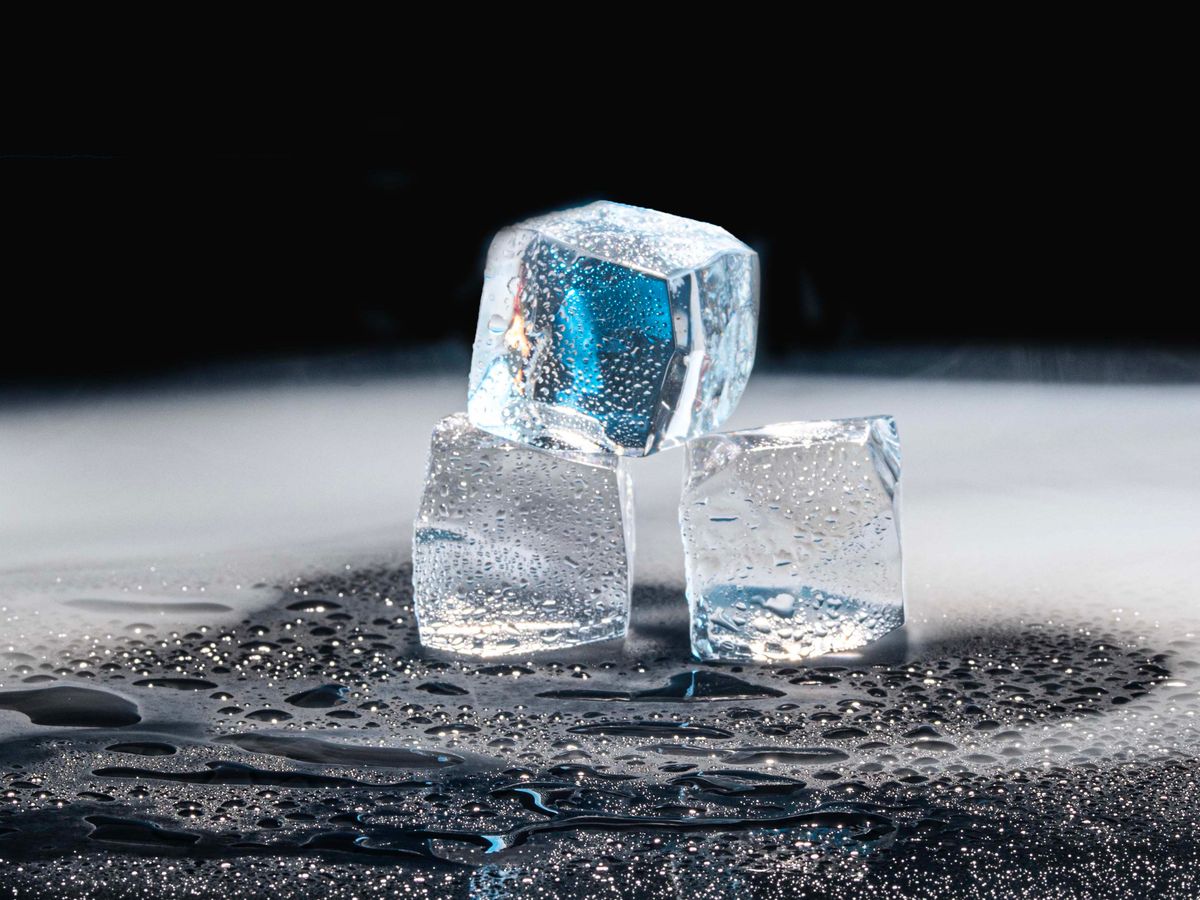
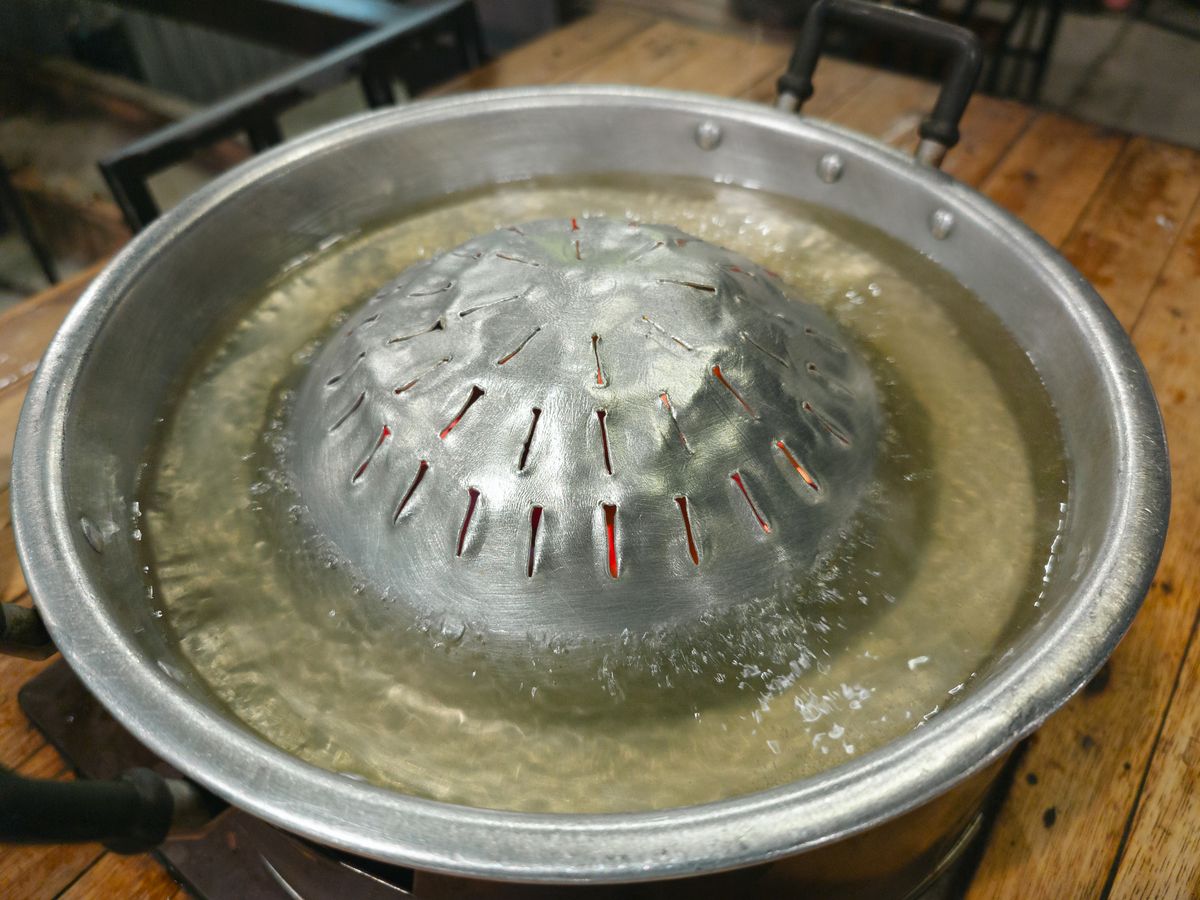
Latent heat calculator
To melt 100 g of Water at 0 °C you need
33.4 kJ
Q = m × L = 100 g × 334 J/g = 33,400 J
| Substance | Fusion | Vaporisation |
|---|---|---|
| Water H₂O | 334 | 2,257 |
| Ethanol C₂H₅OH | 108 | 841 |
| Oxygen O₂ | 13.9 | 213 |
| Nitrogen N₂ | 25.7 | 199 |
| Mercury Hg | 11.4 | 295 |
| Aluminium Al | 397 | 10,500 |
| Iron Fe | 247 | 6,090 |
At a glance
The three states of matter
- Arrangement
- Close together but random
- Motion
- Slide and move past each other
- Shape
- Takes the shape of its container
- Volume
- Fixed volume, hard to squash
- Arrangement
- Far apart and random
- Motion
- Move fast in all directions
- Shape
- Fills any container
- Volume
- No fixed volume, easy to squash
Did you know?
Interesting science facts
Fact 1 / 13
Water (H₂O)
Ice is less dense than liquid water, which is why it floats — and why lakes freeze from the top down.
Ready to see it happen?
Heat a substance yourself and watch its particles change — then check what you have learned.